Kimi K3: AI Is Changing Strategy, Not Just Models
Kimi K3 is more than another large language model. It highlights a fundamental shift in how developers should design AI-powered applications.
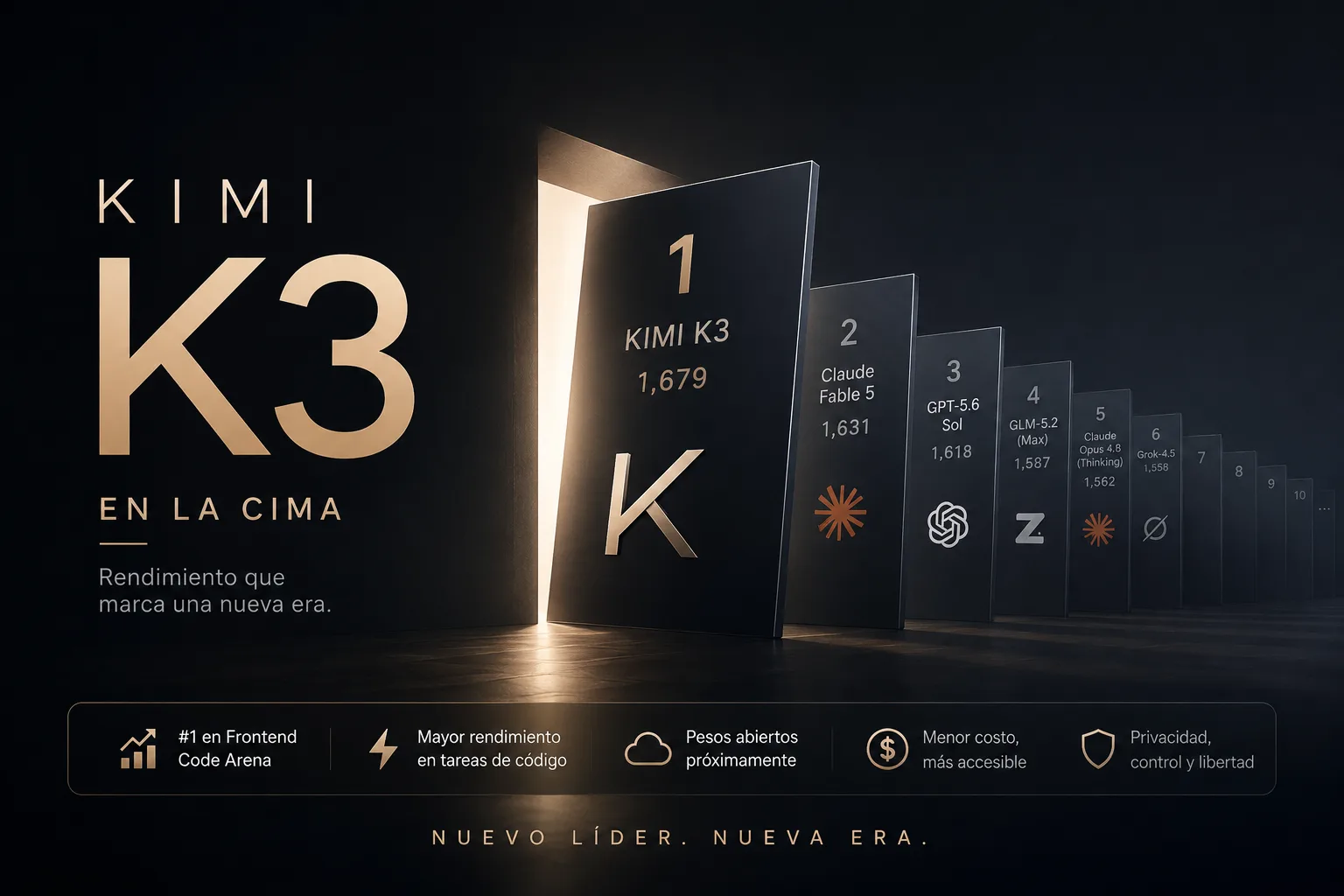
For the past few years, every major AI release has been followed by the same question:
Is it better than GPT or Claude?
The conversation has mostly focused on benchmarks, parameter counts, and reasoning capabilities.
But I believe Kimi K3 represents something much more important.
Not because it has 2.8 trillion parameters.
Not because it performs exceptionally well on coding benchmarks.
But because it signals a major shift in how we should think about building software.
We are no longer tied to a single provider
Just a couple of years ago, building AI-powered products meant relying on a handful of companies.
OpenAI.
Anthropic.
Google.
Today the landscape looks completely different.
Open-weight models such as:
- DeepSeek
- Qwen
- GLM
- Kimi K3
are becoming increasingly competitive.
That changes everything.
Competition means better pricing, faster innovation, and more freedom for developers.
The challenge is no longer choosing the best model
For a long time, software teams focused on finding the “best AI model.”
I’m not sure that’s the right question anymore.
Instead, we should be asking:
How do we design applications that can leverage the best model for each specific task?
Different problems require different capabilities.
A modern application might use one model for coding, another for document understanding, another for reasoning, and another for automation.
AI is becoming part of the architecture itself.
What this means for software engineers
Software engineering is evolving.
Knowing how to call an API is no longer enough.
Developers will increasingly need to:
- Design multi-model architectures.
- Build AI agents.
- Optimize infrastructure costs.
- Reduce vendor lock-in.
- Create applications that can evolve over time.
The competitive advantage will no longer come from using a specific model.
It will come from knowing how to orchestrate multiple models effectively.
My perspective
Kimi K3 won’t be the last model to break records.
Another one will arrive in a few months.
Then another.
What truly matters is that AI is becoming a core software layer rather than a standalone feature.
That shift will fundamentally change how we build software over the next decade.
Final Thoughts
The most interesting thing about Kimi K3 isn’t its size.
It isn’t even its benchmark results.
It’s the fact that open models are becoming serious alternatives for building production-grade software.
As a software engineer, that’s what excites me the most.
The future isn’t about choosing one AI model.
It’s about building systems that can intelligently use many.
What do you think?
Do you believe we’ll stop talking about the “best model” and start focusing on the best AI architecture instead?
I’d love to hear your thoughts.